What is disability? Is there therapeutic intervention? What is the classification of disability? Rehabilitation aimed at improving the individual’s functionality?
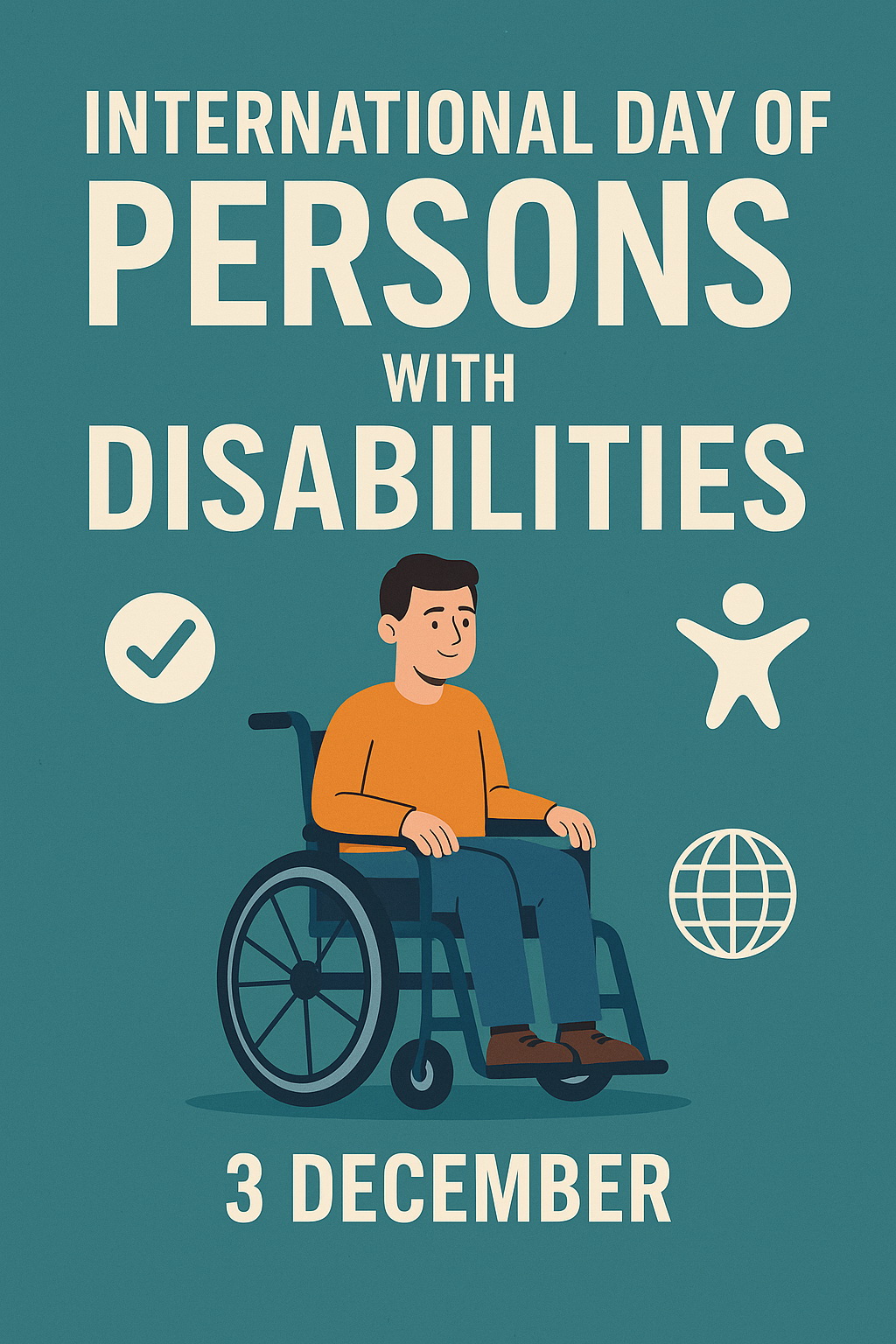
On December 3rd, 1992, the International Day of Persons with Disabilities was proclaimed. This day is dedicated to the inability of the body or mind to perform daily activities aimed at social participation and interaction with the world, as defined by the World Health Organization (WHO).
It is an important opportunity to better understand disability-related issues and to raise awareness of both the rights and the capabilities of persons with disabilities. Moreover, it is the responsibility of all of us to ensure equal access, especially for students with disabilities, not only to education but also to society as a whole.
WHAT IS DISABILITY?
There are various forms of disability, including intellectual, sensory, developmental, psychological, and motor disabilities. One of the main causes of childhood disability, affecting approximately 50 million people worldwide, is Cerebral Palsy (CP).
Cerebral Palsy is characterized by permanent impairments in muscle tone, posture, and movement, often leading to intellectual disability and non-functional skills. It is frequently accompanied by disorders of sensation, perception, cognition, communication, and behavior.
IS THERE THERAPEUTIC INTERVENTION?
These impairments can be modified through the activation of sensory and motor areas of the brain via environmental stimulation (external stimuli) during the processes of learning and memory. This is achieved through physiotherapy strategies applied during rehabilitation, which positively influence neuroplasticity (adaptive changes) of the brain.
WHAT IS THE CLASSIFICATION OF DISABILITY?
The severity of Cerebral Palsy and its progression over time or through treatment can be assessed using various tools. The most widely used index is the Gross Motor Function Classification System (GMFCS) for children with cerebral palsy.
GMFCS is an age-based classification system that evaluates gross motor function in children up to 12 years of age across several domains, including movement, posture, and balance. Each child is assigned a level reflecting the severity of limitations in these areas.
-
Level I indicates minimal limitations (e.g., independent walking)
-
Level V indicates severe limitations (e.g., need for a wheelchair)
Children with Cerebral Palsy who present insufficient trunk control are classified within GMFCS levels III–V and are considered to have moderate to severe disability.
Additionally, another standardized framework based on the International Classification of Functioning, Disability and Health (ICF) of the World Health Organization is used. This system classifies an individual’s functional status by considering not only limitations in activities but also restrictions in social participation, taking into account both personal and environmental factors.
REHABILITATION AIMED AT FUNCTIONALITY
Physiotherapeutic intervention is used as a valuable tool for neurological and cognitive rehabilitation in individuals with Cerebral Palsy and related disorders. Studies show that adherence to rehabilitation programs determines motor and functional outcomes for these individuals.
Therefore, there is a need for innovative and cost-effective approaches that motivate individuals to engage in long-term rehabilitation programs, with the primary goal of improving neurodevelopmental deficits and enhancing functional independence.
By Maria-Georgina Santoriniou
BSc, MSc, NDT – Physiotherapist, Author
KDIF EFALTIRIO
r, R., Boonen, A., Chatterji, S., Kostanjsek, N., Üstün, B. T., & Stucki, G. (2009). Items from patient-oriented instruments can be integrated into interval scales to operationalize categories of the International Classification of Functioning, Disability and Health. Journal of Clinical Epidemiology, 62(9). https://doi.org/10.1016/J.JCLINEPI.2008.04.011 Disability. (n.d.). Retrieved December 2, 2023, from https://www.who.int/health-topics/disability#tab=tab_1
Habenicht, R., Fehrmann, E., Blohm, P., Ebenbichler, G., Fischer-Grote, L., Kollmitzer, J., Mair, P., & Kienbacher, T. (2023). Machine Learning Based Linking of Patient Reported Outcome Measures to WHO International Classification of Functioning, Disability, and Health Activity/Participation Categories. Journal of Clinical Medicine, 12(17), 5609. https://doi.org/10.3390/JCM12175609 International day of persons with disabilities 2023. (n.d.). Retrieved December 2, 2023, from https://www.who.int/campaigns/international-day-of-persons-with-disabilities/2023 Johnstone B., Stonnington H.H., Γνωστική αποκατάσταση νευροψυχολογικών διαταραχών, Επιμέλεια ελληνικής έκδοσης: Λ. Μεσσήνης, Α. Καστελλάκης, Εκδόσεις Φιλομάθεια, 2006 Li, P., Legault, J., & Litcofsky, K. A. (2014). Neuroplasticity as a function of second language learning: Anatomical changes in the human brain. In Cortex (Vol. 58, pp. 301–324). Masson SpA. https://doi.org/10.1016/j.cortex.2014.05.001 Mahalakshmi, B., Maurya, N., Lee, S. Da, & Kumar, V. B. (2020). Possible neuroprotective mechanisms of physical exercise in neurodegeneration. International Journal of Molecular Sciences, 21(16), 1–17. https://doi.org/10.3390/ijms21165895
Prodinger, B., Stucki, G., Coenen, M., & Tennant, A. (2019). The measurement of functioning using the International Classification of Functioning, Disability and Health: comparing qualifier ratings with existing health status instruments. Disability and Rehabilitation, 41(5), 541–548. https://doi.org/10.1080/09638288.2017.1381186